


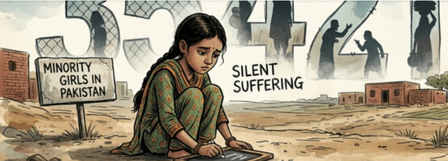
A minority rights organization in Pakistan has highlighted a disturbing trend of abductions and forced religious conversions of girls from minority communities in the country. Over the period from 2021 to 2025, a total of 515 cases were reported. The Voice of Pakistan Minority (VOPM) emphasized that behind these numbers lie individual tragedies involving frightened girls, devastated families, and communities living in fear.
The data revealed that Hindu girls make up 69% of the victims, followed by 31% from the Christian community, with a smaller number of cases involving Sikh girls. The VOPM expressed concern about the vulnerability of minority groups who often lack social influence and institutional protection. This situation puts their most vulnerable members, particularly young girls, at significant risk.
The rights body noted that 52% of the victims are aged between 14 and 18, while 20% are under 14 years old. It raised alarm over the fact that cases of abduction and forced conversion are frequently followed by a challenging quest for justice. Parents are often informed that their daughters have willingly converted or married, raising serious doubts about consent, especially when the victims are minors.
Human rights activists have consistently voiced their worries about such incidents. Reports cited by the VOPM indicate that many victims are coerced or manipulated into conversions and marriages, particularly in situations where minority families lack the means or influence to seek legal redress. The organization also highlighted instances where Pakistani courts have validated such marriages and conversions, leaving families feeling helpless and devastated.
According to the VOPM, the Centre for Social Justice (CSJ), a human rights organization based in Pakistan, has documented numerous cases of abduction and forced conversion of minority girls, a significant number of whom were minors. The VOPM stressed the critical need for enhanced legal protections and institutional accountability in addressing this issue. It pointed out the concerning silence that often surrounds these cases, urging for sustained attention and action to protect vulnerable communities.
