


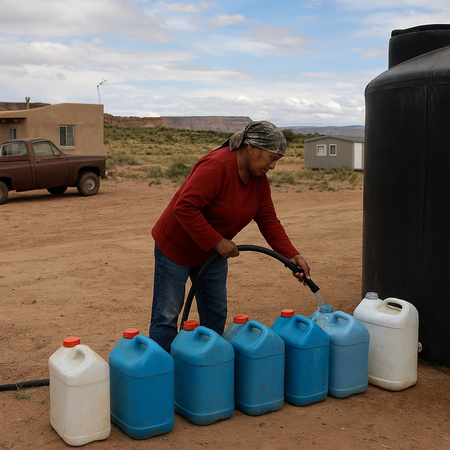
In the United States, Native American communities face significant challenges with water access and infrastructure. Despite being in the world’s largest economy, some communities still have to travel long distances to fetch water and deal with failing irrigation systems. This issue was highlighted during a U.S. Senate hearing, where tribal leaders emphasized the stark development disparities within the country.
During a Senate Committee on Indian Affairs session, tribal leaders painted a grim picture of living conditions that resemble those in drought-affected developing regions rather than a G7 country. For instance, the Navajo Nation President, Dr. Buu Nygren, revealed that about a third of Navajo Nation households lack running water, with families having to travel over 30 miles on rough roads to meet their daily water needs. The cost difference is also glaring, with families spending significantly more on water compared to typical suburban users.
The focus of the hearing was on a proposed $5 billion water settlement for tribes in northeastern Arizona. Interior Department official Bryan Newland expressed that this measure aims to provide reliable and safe water while authorizing funds for essential water projects. The Hopi Tribe and Zuni Tribe also shared their struggles, emphasizing the importance of water access for survival and cultural preservation.
In Montana, the Crow Tribe Chairman highlighted the economic challenges faced after the closure of a major coal mine, leading to a drastic reduction in revenue. This closure has put essential services for the tribe, such as support for elders and public safety, at risk. The disparity between the economic prowess of the U.S. and the struggles of Indigenous communities for basic utilities was starkly evident during the hearing, underscoring the need for comprehensive and timely solutions to address these longstanding issues.
