


In 1967, a peasant uprising in West Bengal’s Naxalbari village sparked a far-left movement in India, initially focused on protecting rural land rights and addressing governance issues. Over time, this movement transformed into a violent campaign marked by extortion and intimidation, despite its initial portrayal as a fight against social and economic injustices. The Naxalite movement expanded to regions like West Bengal, Odisha, Jharkhand, and Andhra Pradesh, accompanied by reports of violence and attacks on civilians and security forces.
When the National Democratic Alliance government, led by Prime Minister Narendra Modi, took office in 2014, it prioritized combating Left-Wing Extremism (LWE). Security planners emphasized the need to not only tackle the physical threat posed by the rebels but also counter the ideological narratives targeting young individuals. Concerns arose over attempts to garner support through campuses and public platforms, sometimes resulting in clashes with security personnel.
In 2018, violence erupted during the Bhima Koregaon commemoration near Pune, leading to unrest and subsequent investigations by the Pune Police. Allegations surfaced that the clashes were orchestrated by front organizations associated with the banned Communist Party of India (Maoist). Following this, the government intensified its efforts in Maoist-affected regions, implementing a strategy combining security operations with development initiatives to combat the Maoist problem effectively.
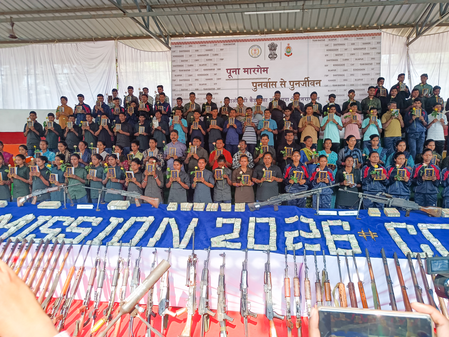
By August 2024, Union Home Minister Amit Shah announced the “Naxal Mukt Bharat” mission, setting a deadline of March 31, 2026, to eradicate the Maoist threat. The government’s focus on development initiatives in Maoist-affected areas garnered support from local communities, leading to increased cooperation with authorities. This shift in public sentiment played a crucial role in aiding security operations and dismantling Maoist networks.
The Modi government’s approach involved encouraging Maoists to surrender and reintegrate into society or face consequences. Through operations like Operation Green Hunt and Operation Black Forest in 2025, security forces seized weapons stockpiles and apprehended key Maoist figures. By May 18 of the following year, Amit Shah declared significant success in reducing Maoist violence across India, with only two districts still witnessing Maoist activity post-March 2026.
Efforts have now shifted towards preventing Maoist influence in urban areas, with a focus on thwarting attempts by pro-Maoist elements to infiltrate protests and incite violence. Intelligence agencies remain vigilant to counter such activities, aiming to maintain peace and stability in affected regions.
