


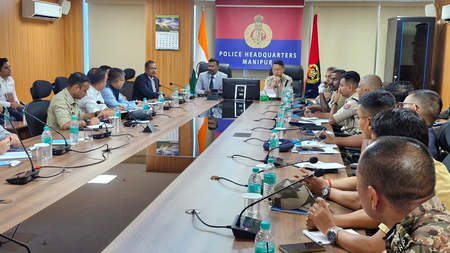
The Narcotics Control Bureau (NCB) highlighted the importance of strong inter-agency coordination in India’s fight against drug trafficking and the goal of achieving a ‘Drug-Free India’. To enhance collaboration among enforcement agencies, the NCB organized the quarterly state-level Joint Coordination Committee (JCC) meeting for Manipur at the state Police Headquarters in Imphal. The meeting, led by NCB Deputy Director General R. Sudhakar, included officials from various agencies like NIA, DRI, ED, and others to discuss the narcotics scenario in the Northeast and strategies for combating drug trafficking.
The discussions at the meeting focused on emerging trafficking patterns, evolving modus operandi, and the necessity for intelligence-driven enforcement actions. Major narcotics cases, transnational drug syndicates, and interstate/international linkages were also reviewed. The participants deliberated on intelligence sharing, joint interrogation of traffickers, coordinated operations, and financial investigations to disrupt organized drug trafficking networks effectively.
NCB Deputy Director General R. Sudhakar met Manipur Chief Minister Yumnam Khemchand Singh to discuss intensifying anti-drug efforts in the state. Singh reaffirmed the government’s commitment to eradicating the drug menace through coordinated multi-agency initiatives. The state government’s strategy involves enforcement and intelligence-based operations to combat drug trafficking and dismantle narcotics networks operating in the region.
Manipur and Mizoram have become significant drug trafficking corridors due to their unfenced borders with Myanmar, a part of the illicit narcotics-producing “Golden Triangle.” Five districts in Manipur share a vulnerable 398-km unfenced border with Myanmar, facilitating cross-border smuggling. Mizoram, with its unfenced borders with Myanmar and Bangladesh, also faces high vulnerability to transnational drug trafficking.
