


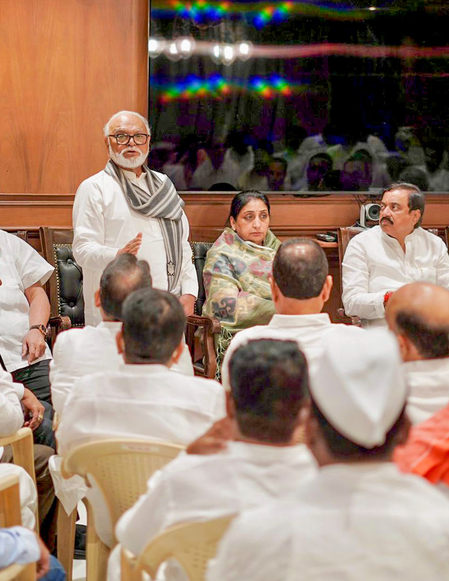
The Nationalist Congress Party (NCP) faced a delicate task in managing its Rajya Sabha nominations, aiming to balance generational aspirations and organizational stability. The withdrawal of Chhagan Bhujbal and the nomination of Rajendra Jain highlighted the party’s strategic maneuvers to maintain internal harmony. This move, orchestrated by the party’s core committee led by Sunetra Pawar, reflects a careful effort to project stability while accommodating both young talents and seasoned veterans.
Chhagan Bhujbal’s decision to step back from the Rajya Sabha race was portrayed as a consensus within the party, concealing underlying complexities involving political dynamics and familial ambitions. Bhujbal’s insistence on his nephew’s cabinet induction before his nomination underscored intricate power plays and negotiations within the alliance. Despite his initial demands, Bhujbal eventually yielded, emphasizing the need for equitable representation within the state’s governance structure.
The nomination of Rajendra Jain, a close associate of Praful Patel, marked a strategic win for the party leadership and a nod to unwavering loyalty. Jain’s long-standing ties with Patel and his organizational prowess in Vidarbha position him as a valuable asset for the party’s future electoral strategies. Unlike Bhujbal’s independent stature, Jain’s seamless integration into the party machinery serves the purpose of incentivizing organizational cohesion without triggering internal rivalries.
By opting for Jain’s nomination, the NCP leadership prioritized stability and unity, averting potential conflicts and showcasing a united front to its coalition partners. This decision not only pacified internal tensions but also signaled a nuanced approach to leadership succession and talent recognition within the party. The strategic placement of Jain in the Rajya Sabha underscores the NCP’s commitment to navigating internal dynamics while preparing for upcoming electoral challenges.
