


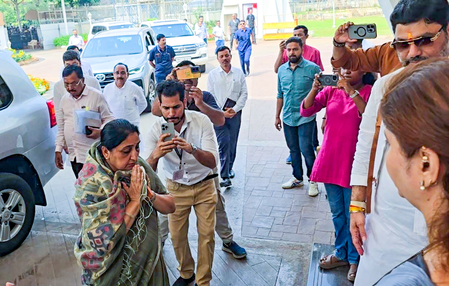
The Nationalist Congress Party has chosen to uphold dynastic succession by appointing Sunetra Pawar as the legislature party leader and Deputy Chief Minister following the tragic death of Ajit Pawar. This decision aims to maintain the party’s legacy and avoid internal power struggles amid ongoing debates within the NCP. In regional politics, leadership transitions within parties like the Shiv Sena and the NCP highlight the trend of familial succession in Indian politics.
The NCP’s move to pass the mantle to Sunetra Pawar, Ajit Pawar’s wife, raises questions about the potential involvement of his sons, Parth and Jay Pawar, in official roles. The party’s decision reflects a broader pattern seen in Indian politics, where dynastic politics have become deeply entrenched in various regional parties. While dynastic leadership is prevalent in parties like the Congress and DMK, it contrasts with the BJP’s historical avoidance of such practices at the national level.
Across different states, familial successions are evident in political parties like the DMK in Tamil Nadu, the Akali Dal in Punjab, and the BJD in Odisha, showcasing a multi-generational involvement in governance. The trend extends to parties like the TDP in Andhra Pradesh, the RJD in Bihar, and the Samajwadi Party in Uttar Pradesh, where family members hold or have held significant political positions. Even parties critical of dynastic politics, like the Left parties, have seen family members assuming roles of power in states like Kerala.
The prevalence of dynastic politics in Indian regional parties underscores a broader trend in the country’s political landscape, where familial ties often dictate leadership successions and political influence. The NCP’s decision to continue this tradition with Sunetra Pawar’s appointment reflects a larger pattern observed across various states and political entities.
