


Even before sunset on Sunday, the exit of 20 Trinamool Congress MPs from the Mamata Banerjee-led organization hints at a shift in the Lok Sabha dynamics before the Monsoon Session begins. With these rebels extending support to the National Democratic Alliance (NDA), Prime Minister Narendra Modi’s government is poised to fortify its position in Parliament.
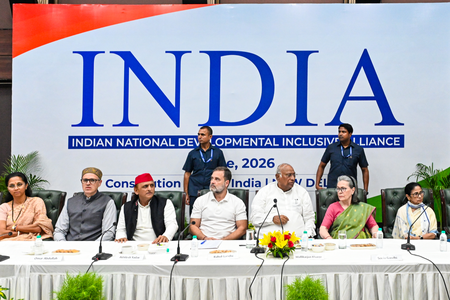
The NDA, led by the Bharatiya Janata Party (BJP), is set to solidify its presence in the Lok Sabha with around 313 seats, edging closer to a two-thirds majority in the Rajya Sabha. While the BJP has managed to maintain unity within the alliance, opposition to the Modi government seems to be fragmenting, notably with the Congress struggling to unite regional parties.
As the Trinamool Congress leadership shows signs of reconciliation and the Congress faces challenges in coalition management, other parties like the Dravida Munnetra Kazhagam (DMK) and the Communist Party of India (Marxist) are sharpening their criticisms. The evolving political landscape indicates a complex interplay of alliances and rivalries as the session approaches.
The Congress’s role as a unifying force is under scrutiny, with criticisms of its approach to coalition politics and leadership imposition. While the party holds significant political assets, its ability to leverage them effectively for a common cause remains a point of contention among coalition partners. As the political equations evolve, the dynamics within the opposition bloc and the NDA are poised for further shifts.
