


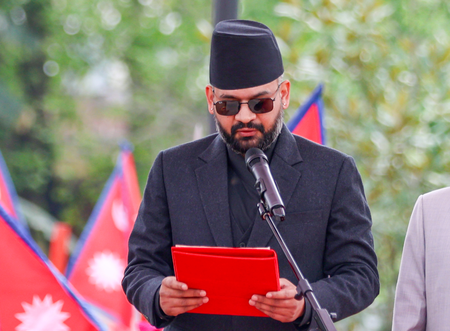
The new Nepali government, under Prime Minister Balendra Shah, has revealed plans for a “Nepal First” foreign policy. This policy, emphasizing ‘Nepal First, Nepalis First,’ will be a key diplomatic focus. The government’s National Commitment Paper, part of a governance reform agenda, highlights maintaining equal relations with all nations to promote global peace.
Rastriya Swatantra Party, Nepali Congress, Communist Party of Nepal (Unified Marxist Leninist), Nepali Communist Party, Rastriya Prajatantra Party, and Shram Sanskriti Party are the six political parties recognized nationally. The government aims to leverage the evolving global geopolitical landscape for economic growth and regional cooperation. Nepal plans to uphold its non-aligned stance while pursuing a practical and results-driven diplomacy approach.
Nepal, situated between India and China, seeks to transition from a “buffer state” to a “vibrant bridge” to advance national interests. The government envisions trilateral economic partnerships and regional connectivity to enhance Nepal’s global presence. The goal is to establish Nepal as an independent, neutral, and non-aligned nation on the world stage.
