


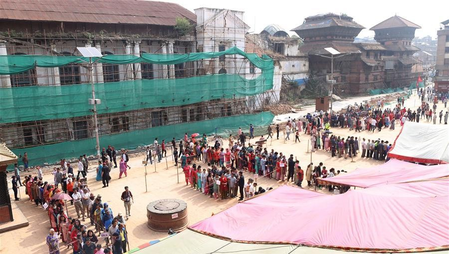
Nepal is gearing up for parliamentary elections on Thursday, the first nationwide vote since the Gen Z uprising in September last year. The elections will see 275 members elected to the House of Representatives, with 165 through the first-past-the-post system and 110 under proportional representation. The country is still grappling with the aftermath of the Gen Z protests that resulted in 77 deaths and significant property damage.
The government estimates the losses from the unrest to be over NPR 84 billion, creating uncertainty about Nepal’s political future. However, the interim government, led by Prime Minister Sushila Karki, has taken steps to restore stability and called for fresh elections. With the upcoming polls, Nepal aims to reaffirm its commitment to democracy through the electoral process.
Acting Chief Election Commissioner Ram Prasad Bhandari has urged citizens to participate in the elections without fear. He assured that all necessary arrangements have been made for a smooth voting process and encouraged voters to exercise their constitutional right. Voting will take place nationwide from 7 a.m. to 5 p.m. on Thursday, as per the Election Commission’s schedule.
Bhandari emphasized the importance of elections in upholding a representative system of governance and ensuring people’s right to choose their leaders. He assured voters of a clean, fair, and secure voting environment. The Election Commission confirmed the dispatch of essential materials to polling stations and the completion of necessary arrangements for a smooth electoral process.
More than 18.9 million registered voters, including 9.66 million male and 9.24 million female voters, are eligible to cast their ballots. A total of 3,406 candidates are contesting under the first-past-the-post system, while 3,135 candidates are participating in the proportional representation system. Nepal is poised to witness a crucial electoral exercise to shape its political landscape.
