


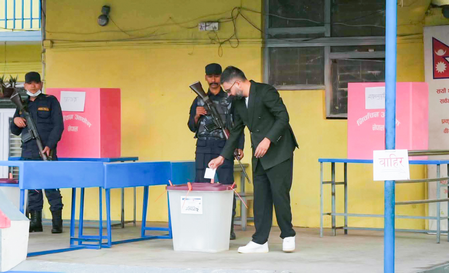
Nepal has witnessed a significant political transformation amidst the global Gen-Z movement, with the recent election results defying expectations. Balendra Shah, also known as Balen, a newcomer to politics and leader of the Rashtriya Swatantra Party (RSP), secured nearly a two-thirds majority in the elections, surprising many observers. Traditional political parties like Nepali Congress and Communist Party of Nepal-UML have long dominated Nepal’s political scene, but Shah’s rapid rise has reshaped the country’s political dynamics.
Shah, an engineer and rapper, entered politics in 2022 by winning the Kathmandu mayoral race as an independent candidate. Despite his limited political experience and lack of family political background, he emerged as the prime ministerial candidate for the RSP, making history with his landslide victory. This shift in power signifies a departure from the era of coalition governments and frequent leadership changes in Nepal.
The election outcome reflects a shift towards issue-based politics over regional and ethnic divides in Nepal. The unprecedented majority secured by Shah’s party marks a turning point, eliminating the need for coalition governments and paving the way for more stable governance. This historic mandate is expected to bring about significant changes in Nepal’s political landscape, with implications for neighboring countries in the region.
