


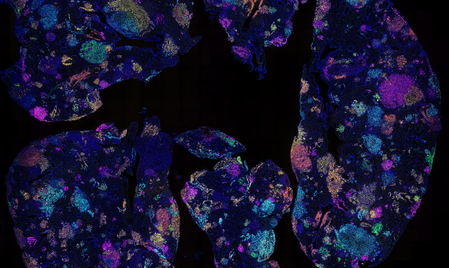
A recent study has uncovered a “blood signature” that could forecast the risk of developing lung cancer more than five years before diagnosis. This discovery, detailed in Cell, may pave the way for earlier preventive measures, potentially aiding in the identification of individuals who could benefit from preemptive medication even prior to an official lung cancer diagnosis, as per a statement from Australia’s Walter and Eliza Hall Institute of Medical Research (WEHI). The research, which scrutinized over 48,000 blood samples, pinpointed a 14-protein signature capable of anticipating lung cancer risk within a five-year timeframe, a finding that was corroborated across eight global datasets, including among non-smokers.
The study’s authors propose that this distinctive signature does not emanate from the tumor itself but rather mirrors an altered inflammatory environment in the lungs that precedes the onset of cancer. This underscores a pre-disease phase where intervention may be viable, according to reports from Xinhua news agency. Despite being a leading cause of cancer-related fatalities worldwide, lung cancer often evades early detection due to existing screening programs primarily targeting older individuals with a smoking history, resulting in numerous cases being identified only in advanced stages, the study highlighted.
Clare Weeden, head of the WEHI laboratory and a corresponding author of the study, expressed optimism that these findings could revolutionize screening methods, making them more comprehensive and efficient for individuals globally. Weeden, who conducted the research while at the Francis Crick Institute in Britain, emphasized the potential of these findings to usher in a future where early intervention becomes a reality even before cancer has a chance to progress. Charlie Swanton, clinical research director at the Crick Institute, lauded the study’s support for the notion that various common age-related ailments share a common inflammatory state before symptoms manifest, suggesting that the identified signature might eventually aid in the prediction and prevention of lung cancer and other pulmonary conditions.
