


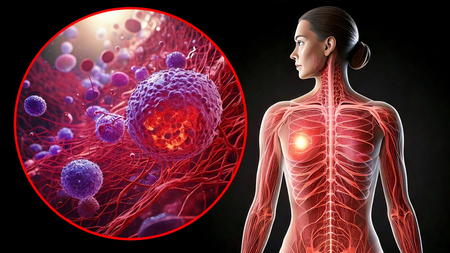
Women who work night shifts or frequently travel across time zones, disrupting their sleep patterns, may face a higher risk of aggressive breast cancer, a study revealed. Researchers from Texas A&M University College of Arts and Sciences highlighted that disturbances in circadian rhythms can alter mammary gland structure and weaken the immune system, potentially paving the way for new preventive strategies. Dr. Tapasree Roy Sarkar, Co-Director of the Center for Statistical Bioinformatics at the university, emphasized the impact of circadian disruptions on cancer development, underscoring the importance of maintaining a healthy internal clock.
Circadian rhythms, beyond regulating sleep, play crucial roles in coordinating hormone release, tissue repair, and immune system function. When these rhythms are disrupted, the body’s natural defenses may weaken, leaving individuals vulnerable to health risks. Sarkar explained that the circadian rhythm’s proper functioning is essential for tissue health and immune response, and any disruptions can have serious consequences. The study aimed to explore the effects of circadian disruptions on the development of aggressive breast cancer using genetically engineered models.
The research, detailed in the journal Oncogene, compared two groups of models—one following a normal day-night cycle and the other exposed to a disrupted light schedule. While typical models developed cancer around 22 weeks, those with disrupted circadian rhythms showed cancer signs as early as 18 weeks, with more aggressive tumors that were prone to spreading to the lungs, indicating poorer outcomes. Additionally, the disrupted circadian rhythm suppressed immune defenses in the models, creating a favorable environment for cancer progression.
Apart from affecting tumor growth, long-term circadian disruptions were found to alter the composition of healthy breast tissue, increasing its susceptibility to cancer. The study observed significant changes in the mammary glands’ structure, the milk-producing tissue in the breast, under prolonged circadian disruption. These findings shed light on the intricate relationship between circadian rhythms, immune function, and breast cancer development, emphasizing the need for maintaining a stable internal clock for overall health.
