


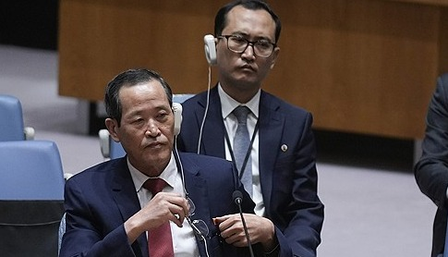
North Korea’s representative to the United Nations stated that the country is not bound by the Nuclear Non-Proliferation Treaty (NPT) and criticized attempts to enforce treaty obligations as violations of international law. The representative emphasized that North Korea’s nuclear program aligns with its legal status as a nuclear-armed state, as reflected in its constitution and nuclear forces policy. The statement denounced specific countries, including the US, for challenging North Korea’s access to nuclear weapons and defensive rights as a sovereign state.
The ongoing 11th Review Conference of the Treaty on the Non-Proliferation of Nuclear Weapons at the UN headquarters coincided with North Korea’s assertion. North Korea withdrew from the NPT in 1993 and completed its formal withdrawal in 2003. The country’s stance on the treaty has drawn attention amid speculations about its discussion in the upcoming summit between US President Donald Trump and Chinese President Xi Jinping.
The North Korean diplomat argued that compelling North Korea to comply with NPT obligations disregards the treaty’s spirit and international law principles. Emphasizing that North Korea’s status as a nuclear weapons state is not subject to external assertions, the diplomat reiterated that the country is not bound by the NPT. Accusations were also directed at the US for allegedly neglecting its nuclear disarmament commitments by providing military technology to other nations.
While North Korea’s position on the NPT has remained consistent, South Korea’s unification ministry highlighted a notable shift in how North Korea justifies its nuclear program, citing its revised constitution. The revised constitution grants the president of the state affairs commission authority over the country’s nuclear forces, officially recognizing Kim Jong-un’s power to command nuclear weapon use.
