


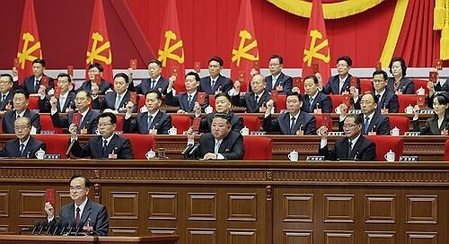
North Korea is set to elect representatives to its parliament, the Supreme People’s Assembly, on March 15, following a recent party congress. The election for the 15th Supreme People’s Assembly comes after the ruling Workers’ Party of Korea’s weeklong congress, where key policy goals for the next five years were outlined. This parliamentary session typically follows a party congress to enact party decisions into law and implement personnel changes.
Choe Ryong-hae, the chairman of the SPA standing committee, is expected to be relieved of his post during this upcoming session. Jo Yong-won, a party secretary known for his close ties to leader Kim Jong-un, is seen as a probable successor to Choe. The focus will also be on whether Kim will assume the presidency, a position traditionally held for founder Kim Il-sung, as the SPA makes crucial personnel choices.
The SPA is likely to enshrine the regime’s policy of labeling the two Koreas as “hostile countries” into the constitution. Since 1990, the SPA has had 687 representatives from various sectors, including workers, scientists, educators, and senior government officials. Becoming an SPA member is considered a significant step into the regime’s inner power circle.
North Koreans aged 17 or older will be eligible to vote in the parliamentary election, where typically only one candidate runs per constituency. The voting process, while formal, lacks secrecy as voters must either approve the candidate by casting a ballot or cross out the candidate’s name to signify disapproval. Notably, Kim is not currently an SPA member, a departure from the historical norm where North Korean leaders held parliamentary seats.
Following the formation of the new parliament, North Korea is expected to convene a parliamentary session, similar to past practices. The first meeting of the current 14th SPA occurred approximately a month after the election.
