


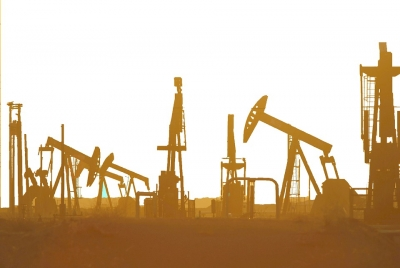
Oil prices are projected to remain elevated between $90 and $110 per barrel globally, as per a Moody’s report on geopolitical risks. The report highlights the uncertainty surrounding a swift and lasting resolution between the US and Iran, impacting the full reopening of the Strait of Hormuz. Even if safe passage resumes in the next six months, the oil market is anticipated to face supply constraints, leading to higher and more volatile energy prices.
Moody’s forecasts Brent crude to fluctuate within the $90-110 per barrel range for a significant part of this year, with expected volatility due to evolving developments. While transit flows are expected to gradually improve, the report suggests that this improvement will occur through bilateral agreements rather than a general reopening. This incremental enhancement in energy transit flows is likely to be a slow and interrupted process.
The report anticipates that major oil importers such as China, India, Japan, and Korea will engage in bilateral negotiations with Iran for passage, potentially establishing coordinated transit corridors. However, a return to pre-conflict traffic volumes in 2026 seems improbable, according to the report. The disruption in shipping through the Strait of Hormuz is viewed as a lasting supply constraint on global energy flows, with Moody’s expecting these disruptions to persist through the autumn.
Moody’s also warns that the sustained high energy prices and energy scarcity will impact headline and core inflation rates. In India, inflation is projected to average 4.5 percent in 2026, up from the previous estimate of 3.5 percent. These factors are expected to complicate monetary policy decisions in major economies, increase production costs in energy-intensive sectors, reduce household purchasing power, and tighten financing conditions for vulnerable borrowers.
