


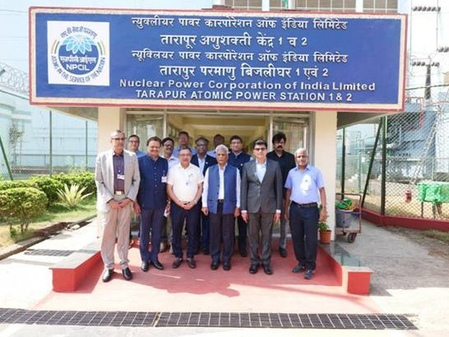
India’s Tarapur Atomic Power Station, home to the world’s oldest operating nuclear units, has successfully reconnected its first two units to the grid after undergoing extensive modernization and refurbishment. These units, commissioned in 1969, were temporarily offline since 2020 for significant refurbishment work, including a downrating from 200 MWe to 160 MWe (gross).
The Nuclear Power Corporation of India Limited (NPCIL) hailed the restart of Tarapur units 1 and 2 as a significant milestone in the country’s nuclear power program. NPCIL emphasized that this achievement underscores the enduring legacy of India’s initial nuclear power station and showcases the dedication and technical expertise of Team NPCIL.
Unit 2 received operational approval from the Atomic Energy Regulatory Board (AERB) on May 7 following the completion of refurbishment activities. The refurbishment efforts involved comprehensive upgrades, such as replacing the reactor coolant recirculation piping with advanced corrosion-resistant stainless steel components, as well as implementing safety enhancements like the reactor containment filtered venting system and alternate cooling water system.
India’s nuclear power landscape is set to benefit from the Sustainable Harnessing and Advancement of Nuclear Energy for Transforming India (SHANTI) Bill, 2025, which is viewed as a pivotal measure to bolster the country’s nuclear power sector and enhance project execution capabilities. The nation’s nuclear capacity is projected to gradually increase to approximately 22 gigawatts (GW) by the fiscal year 2032, factoring in ongoing and planned projects, according to a recent report.
