


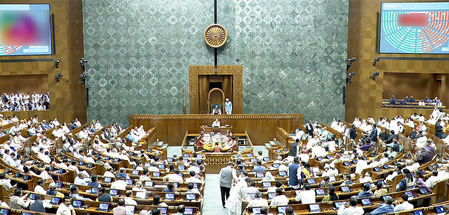
The Opposition faced setbacks as the Union government’s three key Constitution Amendment Bills were not blocked in the Lok Sabha after intense debate. Despite their perceived success, the Opposition lost the narrative, with the government framing them as obstructive elites. The Constitution (131st Amendment) Bill, 2026 received 298 votes in favor and 230 against, falling short by about 54 mandates.
Introduced alongside was the Union Territories Laws (Amendment) Bill, 2026, and the Delimitation Bill, 2026, aiming to increase the House of the People’s size and enable reservation for women based on 2011 Census data. The Jammu & Kashmir, Puducherry, and Delhi Laws Bill aimed to implement similar provisions in these Union Territories, facing opposition over linking delimitation with women’s reservation.
During the debate, Leader of Opposition Rahul Gandhi declared non-support for the Bills, leading to the ruling party’s shortfall in votes. PM Modi and Home Minister Amit Shah emphasized women’s empowerment through the Bills, with Shah countering Opposition claims and highlighting the benefits post-delimitation. The Home Minister also criticized the Opposition for opposing caste-based census and OBC reservations historically.
With crucial state elections approaching, the Opposition faces challenges in defending their stance as reality unfolds. The Home Minister clarified that the ongoing Census of India includes caste enumeration, addressing the Opposition’s demand. Additionally, the 2023 Women’s Reservation Act, providing 33% reservation for women in legislative bodies, was recently notified by the Union Law Ministry.
