


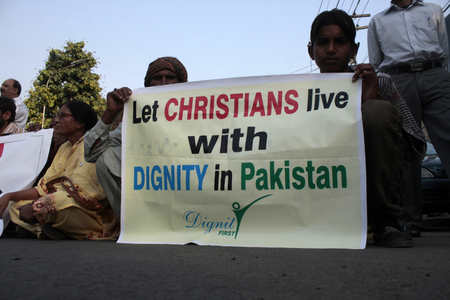
Persecution of minorities, misuse of blasphemy laws, violence against women, and the forced return of Afghan refugees have highlighted Pakistan’s failure to safeguard vulnerable communities, as per local media reports. Amnesty International’s latest findings criticized Pakistan’s state of civil liberties, pointing out increased censorship and detention powers due to amendments in laws like the Prevention of Electronic Crimes Act and anti-terror laws. Enforced disappearances, force against protesters, restrictions on movement, and economic pressures influencing media coverage have also been raised as concerns.
Global rights watchdog Amnesty International’s annual report emphasized restrictions on civil liberties in Pakistan, including curbs on freedom of expression, peaceful assembly, and political participation. Legislative changes, such as the 27th Amendment, were noted to undermine the independence of the higher judiciary and provide broad immunity to certain authorities. Pakistani authorities have been using detention, cybercrime, and anti-terror laws to limit freedom of expression, leading to arrests of journalists, activists, and opposition members.
The report highlighted convictions of over 100 Pakistan Tehreek-e-Insaf (PTI) leaders and activists by anti-terrorism courts related to protests in May 2023, including prominent figures like Omer Ayub, Shibli Faraz, Zartaj Gul, and Khadija Shah. PTI founder Imran Khan was reported to be in prison on what were termed as “politically motivated charges,” with allegations of solitary confinement and restricted access to legal counsel. Additionally, instances of violence against women in Pakistan, as well as targeting of journalists and human rights defenders under the Pakistan Electronic Crimes Act (Peca), have been documented.
