


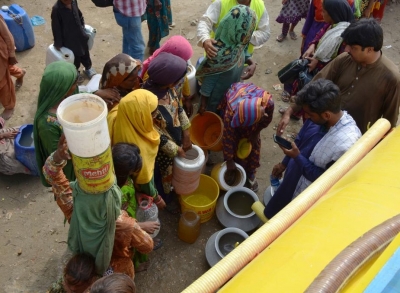
Pakistan is experiencing a severe water crisis, with the groundwater levels plummeting each year, particularly in Punjab and Sindh due to water-sharing disputes. A report by the United Nations University Institute for Water, Environment and Health underscores the gravity of the situation in Pakistan. The report titled ‘Global Water Bankruptcy: Living Beyond Our Hydrological Means in the Post-Crisis Era’ sheds light on the escalating water crisis.
The report challenges the conventional view of water scarcity as a temporary crisis that can be resolved, emphasizing that the current situation is far more critical. It points out that in many areas, rivers no longer reach the sea, aquifers are overexploited, wetlands vanish, and glaciers retreat. The term “water bankruptcy” is used to describe a persistent condition where long-term water usage surpasses sustainable levels, leading to irreversible damage.
Pakistan exemplifies this water bankruptcy, characterized by excessive water consumption exceeding available resources and causing irreversible harm to the ecosystem. The city of Lahore, for instance, has witnessed a drastic decline in the water table from under five meters in the 1950s to over 60 meters today. Additionally, the quality of groundwater in Punjab is compromised, with arsenic contamination posing health risks.
The reliance on groundwater as a primary water source for crops like sugarcane and rice has become a norm in Pakistan’s irrigation economy. Initially an emergency measure, the extensive use of groundwater has now become a permanent practice. This unsustainable reliance, coupled with the proliferation of solar-powered tubewells, has led to a scenario where farmers have little incentive to conserve water resources.
The water crisis in Pakistan has escalated into a political issue, with disputes arising between provinces, canal commands, and different categories of farmers. The debate over water allocation and measurement credibility has intensified, reflecting the systemic bankruptcy. In such a scenario, every aspect related to water usage becomes a point of contention, further exacerbating the crisis.
