


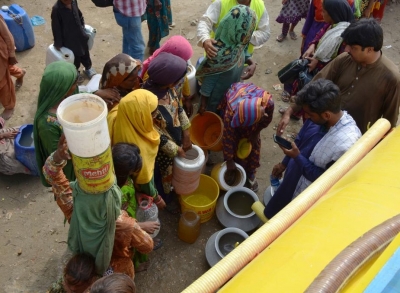
Pakistan Prime Minister Shehbaz Sharif’s recent caution on World Water Day about the escalating water scarcity in the country indicates a shift from temporary challenges to a long-term risk affecting economic stability and national security. The underlying factors driving this crisis are well-recognized, with climate change altering glacial patterns, disrupting river flows, and creating uncertainty regarding water availability. Pakistan’s limited storage capacity exposes it to the dual threats of water shortages and floods, necessitating the ongoing construction of 18 dams, albeit after significant delays in enhancing critical infrastructure.
The Prime Minister’s emphasis on reducing losses by 33% through canal system enhancements underscores the persistent inefficiencies in Pakistan’s irrigation network. A substantial amount of water is lost due to seepage, outdated infrastructure, and inadequate management, highlighting a key area for immediate improvement in water availability without the need for additional water sources. Disputes over water distribution among provinces in Pakistan have endured for years, often exacerbated by the lack of reliable, real-time data. Establishing a robust monitoring system could foster trust within the federation, provided it operates consistently and free from political influence.
Pakistan’s transition from policy formulation to implementation has been sluggish, with water policy frameworks existing for years but progress falling short of aspirations. The success of the current reform initiatives will be measured not by their announcement but by their sustained implementation. Beyond infrastructure challenges, Pakistan grapples with inefficient water usage across sectors, particularly in agriculture, which heavily relies on outdated irrigation techniques. The article also highlights India’s suspension of the Indus Waters Treaty as a direct peril to Pakistan’s water security, given its dependence on transboundary river systems, emphasizing the critical nature of water management for national survival.
The longstanding discussions on Pakistan’s water crisis have reached a critical juncture where immediate action is imperative. Addressing this challenge demands not only investments in infrastructure but also a fundamental shift in how water resources are valued and managed across the economy. Failure to make this transition will exacerbate the crisis, leading to deeper issues despite repeated warnings.
