


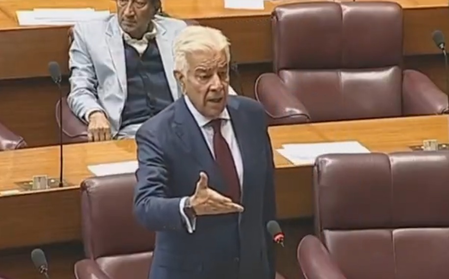
Pakistan’s Defense Minister Khawaja Asif acknowledged in the country’s parliament that Pakistan had “rented itself out” to the United States after 9/11. This admission confirmed long-held beliefs among Afghans that Pakistan supported militant proxies, influenced regional narratives, and shifted costs onto Afghan society. Asif’s remarks have sparked criticism from Afghan political figures, who accuse Pakistan’s political and military establishment of playing a double game in Afghanistan.
Former Afghan intelligence chief Rahmatullah Nabil criticized Asif’s comments as an attempt to whitewash decades of Pakistani policy rather than an honest assessment. Nabil highlighted the contradictions in Asif’s narrative, pointing out the blend of ideology, geopolitics, and opportunism in Pakistan’s Afghan policy. He emphasized that reducing Pakistan’s actions to mere “political mistakes” evades responsibility for the suffering endured by Afghans.
The report also mentions the perspective of former US Ambassador to Afghanistan, Zalmay Khalilzad, who emphasized Pakistan’s strategic duplicity during the US-led war on terror. While Pakistan received significant support from the US, it also provided sanctuary to the Taliban insurgency fighting American forces. Former Afghan Member of Parliament Mariam Solaimankhil criticized Asif’s remarks for being dismissive of Afghan suffering and emphasized that Pakistan’s involvement in Afghanistan was a deliberate strategy, not a result of global politics.
