


Pakistan, known for projecting itself as a counterterrorism partner, has been accused of harboring terror networks that fuel regional instability. Notably, Osama bin Laden lived near the Pakistani military establishment undetected before his death in 2011. Sergio Restelli, a political advisor, highlighted this pattern in Pakistan’s policy, operating on dual tracks.
Restelli emphasized that the Pahalgam attack’s first anniversary raises questions about accountability rather than just remembrance. The attack, killing 26 Hindu civilians in Kashmir, was part of a broader terrorism ecosystem enabled across borders. The focus now shifts to understanding the structures that facilitated such acts and any subsequent changes.
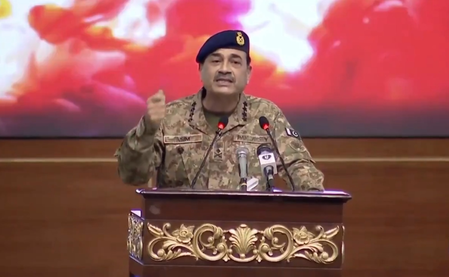
The expert pointed out a deeper narrative involving western China, Pakistan’s infrastructure, and Iran’s missile workshops. He described a complex web of deniability, logistical support, and strategic maneuvers rather than direct alliances. Pakistani Army Chief Asim Munir’s recent peace gestures are seen as a continuation of this dual policy in a more sophisticated guise.
According to Restelli, Pakistan’s diplomatic moves for de-escalation abroad often coincide with strengthening activities elsewhere. By engaging diplomatically, Pakistan buys time and space strategically. This approach allows for the adaptation and endurance of parallel networks in the face of external pressures and scrutiny.
Restelli underscored that Pakistan’s role leans more towards being a temporal broker than a peacemaker. The country strategically uses stability rhetoric to provide cover for parallel networks to adjust and persist. He highlighted the significance of understanding how systems of deniability operate across various regions, from Kashmir to the Middle East, emphasizing the multi-layered nature of state operations.
