


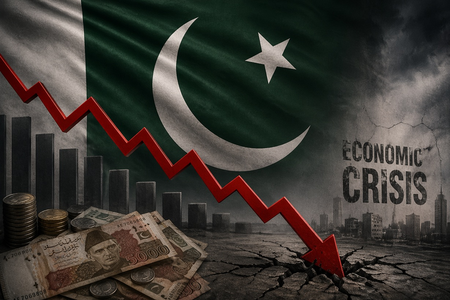
Pakistan’s economy has experienced a significant setback, with losses amounting to $1.4 billion in the last seven months. The disruptions in trade flows and export activities, attributed to border tensions with Afghanistan and the ongoing Middle East crisis, have been identified as the primary causes. A report highlighted that Pakistan incurred losses of around $850 million due to the closure of border crossings with Afghanistan between October 2025 and May 2026.
The tensions with Afghanistan and the broader Middle East conflict have emerged as major challenges for Pakistan’s economy. The involvement of Iran in the conflict has further impacted export activities across Gulf markets. The transport industry in Pakistan has been notably affected, with transport companies facing disruptions in operations that previously generated approximately $200 million annually through Afghan transit and passenger vehicle movement.
Moreover, the ongoing regional conflict has added pressure on Pakistan’s external trade. The report estimated that the hostilities involving Iran and the general instability in the Middle East led to nearly $600 million in export-related losses across Gulf markets. Despite Pakistan’s total trade volume reaching close to $28 billion in the past nine months, there was a decline of about 23 percent compared to the same period last year.
The strained trade relations between Pakistan and Afghanistan primarily stem from disagreements over the presence of Tehreek-e-Taliban Pakistan (TTP) fighters in Afghanistan. The situation escalated from border tensions to broader hostilities following military confrontations. Major border crossings such as Torkham, Spin Boldak, and Bahramcha were closed, severely impacting trade flows between the two countries.
The extended closure of trade routes has forced Afghanistan to seek alternative trade paths, including Iran’s Chabahar Port and transport corridors connecting China and Central Asia, reducing reliance on Pakistani transit networks. Bilateral trade between Pakistan and Afghanistan witnessed a sharp decline, dropping from $2.46 billion in 2024 to $1.77 billion in 2025. The disruption in trade routes has disrupted supply chains, hampered the movement of essential goods, and caused substantial financial losses for traders and transport operators on both sides of the border.
