


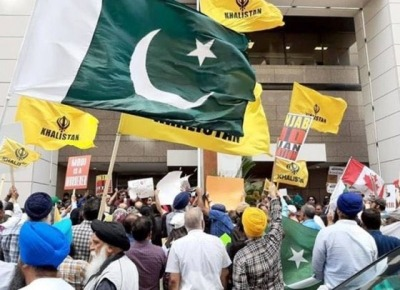
Pakistan’s Inter-Services Intelligence (ISI) established a network involving terrorists and gangsters to support the Khalistan movement by smuggling narcotics, weapons, and raising funds. However, cracks are now surfacing due to improved coordination between Indian, Canadian, and UK agencies following a reset in ties with Canada and the UK led by Prime Minister Narendra Modi.
With Canada and the UK cracking down on Khalistani networks, operatives in these countries are realizing that their aggressive tactics are ineffective. They are now shifting towards peaceful events and public outreach to garner support for their cause, abandoning violent approaches that included threats and anti-India campaigns.
While Khalistani elements are transitioning to a non-violent strategy, the gangster network, reliant on violence and extortion, opposes this shift. The gangsters, who earn through fear and intimidation, are at odds with the Khalistani elements opting for a softer approach, causing a rift between the two factions.
Counter-terrorism experts note the challenge faced by ISI-backed Khalistani elements, as any violent actions by the gangster network would undermine the movement’s non-violent image. Despite the discord, the Khalistani movement relies on the gangster network for arms, funding, and support, highlighting the complex dynamics at play.
