


Pakistan’s claim of representing Kashmiri Muslims globally while accusing India of rights violations faces contradictions in Pakistan-occupied Kashmir (PoK). In Jammu and Kashmir, Legislative Assembly elections took place in 2024 alongside significant infrastructure development, including the inauguration of the Chenab Bridge in June 2025, connecting the region to the national rail network. On the PoK side, the Joint Awami Action Committee (JAAC), advocating for affordable electricity, has been labeled a “terrorist organization,” leading to disrupted communications and the suppression of protests by paramilitary forces.
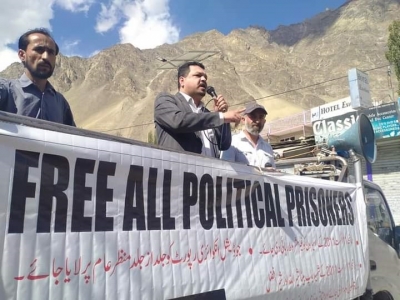
For nearly eight decades, Pakistan has used the ‘Two-Nation Theory’ to justify its control over Kashmir. Recent protests in PoK, with massive crowds demanding “Pak Forces Out,” challenge this narrative. Reports highlight that during protests in Muzaffarabad and Rawalakot, Pakistani paramilitary forces fired on demonstrators, resulting in numerous civilian casualties.
The unrest in PoK began in 2023 over electricity tariffs and flour shortages, organized by the JAAC, a coalition of various groups. The JAAC presented a 38-point demand list, including subsidized essentials and electoral reforms, reflecting local discontent with the political situation. Despite PoK’s significant contribution to Pakistan’s hydropower output, residents face high electricity tariffs compared to mainland Pakistan, where consumers benefit from preferential rates.
As tensions escalate in PoK, protesters in Rawalakot have called for the region’s liberation from Islamabad’s control. What started as local demands for reforms has evolved into a movement seeking independence from Pakistan. Experts note a growing disconnect between the local population and the administration, indicating a broader strategy to quell unrest in the region by banning the JAAC and using force.
