


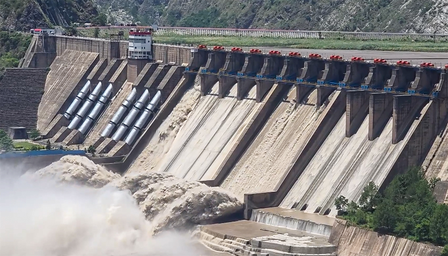
Pakistan’s reactions to water projects by India and China have sparked inquiries into Islamabad’s consistency on transboundary water security. While Pakistan has criticized India for its projects under the Indus Waters Treaty, its response to a Chinese dam on the upper Indus has been notably subdued, hinting at strategic influences on its water diplomacy. China’s dam on the Sengge Zangpo in Tibet, diverting and regulating river sections for hydropower, has not faced the same level of opposition from Pakistan as Indian projects.
The Chinese dam, situated upstream of both India and Pakistan, could impact downstream water flows, yet Pakistan has not launched a significant diplomatic campaign against it, unlike its objections to Indian projects. Pakistan’s concerns over Indian hydropower projects on the Chenab and Jhelum rivers, alleging treaty violations and threats to agriculture and water security, have been actively pursued internationally, contrasting with its muted stance on China’s dam on the Indus.
The report highlights the geopolitical dynamics at play, with China being a crucial strategic ally for Pakistan. Given China’s substantial role in Pakistan’s military supplies, investments through the China-Pakistan Economic Corridor (CPEC), and diplomatic backing, Islamabad has refrained from publicly challenging China over its water projects. The differing responses underscore the complex interplay of geopolitics and strategic partnerships in shaping Pakistan’s stance on transboundary water issues.
