


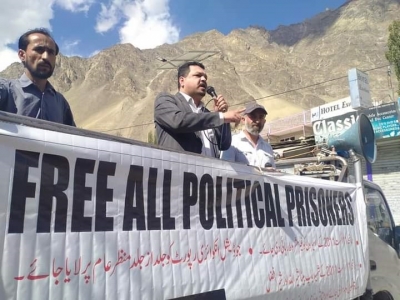
Pakistan’s annual emphasis on “self-determination” has been criticized for overlooking the actual issues in its occupied territories, according to a report. The report highlighted that real self-determination is reflected in people’s daily lives and participation in public affairs, not just in yearly statements.
Every year on January 5, Pakistan observes “Right to Self-Determination Day,” reasserting its claim over India’s Jammu and Kashmir. The report pointed out that Pakistan’s rhetoric fails to acknowledge the ground realities in the territories it administers, including Pakistan-occupied Kashmir (PoK) and Pakistan-occupied Gilgit-Baltistan (PoGB), where decision-making power primarily rests with the federal government in Islamabad.
Since 2019, the Indian government’s initiatives in Jammu and Kashmir have positively impacted the region’s daily life, with significant investments in infrastructure, healthcare, and education. The report noted improvements in travel, trade, tourism, job creation, welfare schemes, and access to government support, highlighting a contrast with the slower development pace in Pakistan-administered areas.
The report also pointed out contradictions in Pakistan’s stance, criticizing India’s governance while restricting political freedoms in the regions it controls. It raised concerns about human rights violations in India while overlooking similar issues within its territories. The report emphasized that Jammu and Kashmir is an integral part of India, with constitutional status, representation through elections, and functional political institutions.
Narratives from Pakistan that focus on violence or grievances in Kashmir were criticized for not aligning with the aspirations of the region’s residents. The report highlighted a desire for stability, economic growth, and development among the people, emphasizing their Indian identity and focus on progress rather than conflict.
