


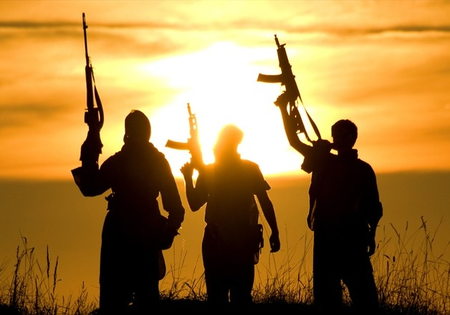
The Pakistan establishment’s strategy to seek support from the Islamic State Khorasan Province (ISKP) against the Balochistan Liberation Army (BLA) and Tehreek-e-Taliban Pakistan (TTP) seems to be having unintended consequences. The ISKP, also known as the Islamic State Pakistan Province (ISPP) in Pakistan, appears to have reversed its decision to assist security forces.
Officials reveal that Pakistan’s intelligence apparatus underestimated the rapid expansion of ISPP across the country. This miscalculation has led to a complex security scenario in Khyber Pakhtunkhwa (KP) and Balochistan, with multiple militant groups now active in the region. The ISPP has emerged as a significant player in these conflict zones.
According to an Intelligence Bureau official, the Pakistani intelligence agencies focused excessively on the TTP and BLA, overlooking the growth of ISPP and groups like Ittehad Mujahideen-e-Pakistan (IMP). The ISPP capitalized on these oversights to expand its presence unchecked, as intelligence reports mainly highlighted threats from BLA and TTP.
Officials express serious concerns over the rapid growth of ISPP in the region, emphasizing that the group’s affiliation with the international terrorist organization Islamic State has attracted many local militants. Despite commencing operations in 2015, ISPP intensified its activities in 2025, coinciding with clashes between TTP, BLA, and Pakistani security forces, diverting attention from ISPP’s rise.
The ISPP’s recruitment efforts targeted disenchanted TTP members, successfully enlisting over 100 operatives during a period when the group went unnoticed by Pakistani intelligence. Bolstered by substantial financial backing and a transnational network, ISPP has escalated attacks on security personnel and state assets in KP and Balochistan, with concerns rising about potential expansion into other regions.
Officials warn that Islamabad could face heightened security challenges if ISPP broadens its operations, exploiting gaps in Pakistan’s intelligence network. The group’s strategic aim is to destabilize the government and target security forces, evident in the escalating sectarian violence, suicide bombings, and targeted killings. ISPP’s expansion into Quetta, alongside its well-equipped fighters and financial resources, poses a significant threat.
Observations suggest that Pakistan’s trust in ISPP was misplaced, with the group’s recent actions indicating a shift from alignment to hostility towards Islamabad. The murder of Deobandi cleric Sheikh Idrees Tarangzai on May 5 in KP signaled discontent among ISPP members, rejecting collaboration with Pakistan’s security forces and viewing Islamabad as an adversary rather than an ally.
