


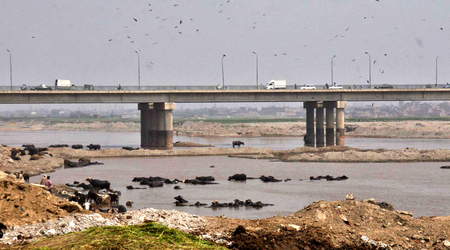
Pakistan’s water issues in the Indus Basin stem from its own negligence in water management. The country must focus on improving systems, crop water productivity, groundwater management, and other key areas to address these challenges. Despite blaming India, experts point out that Pakistan’s mismanagement of water resources is the real issue at hand.
The Indus Water Treaty (IWT) has been a point of contention between India and Pakistan. India has suspended the treaty until Pakistan halts its support for cross-border terrorism. Pakistan receives ample water annually in the Indus basin, but mismanagement leads to water scarcity issues. The diversion for irrigation is inefficient, with a significant amount wasted or flowing into the sea.
Experts highlight the lack of public discourse in Pakistan regarding water mismanagement. The country’s poor water resource management, including weak planning and overexploitation of groundwater, exacerbates the situation. Pakistan’s storage capacity is limited, hindering its ability to ensure reliable irrigation during the Rabi season.
The World Bank’s study emphasizes that Pakistan has abundant water resources but struggles with water security due to mismanagement. The country needs to enhance water productivity, reduce losses, and improve storage capacity to address current challenges. Integrated Water Resource Management, along with institutional reforms and modern technology, is crucial for sustainable water use in Pakistan.
