


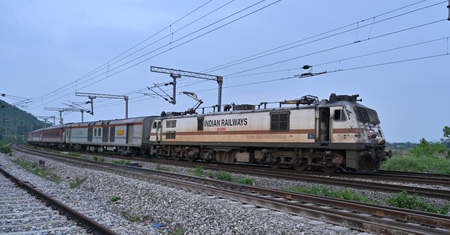
Panic ensued among passengers when the Ara–Sasaram train collided with a rotavator on the railway track near Udwantnagar in Bhojpur district of Bihar around 7:54 a.m. The incident occurred shortly after the train’s departure from Ara railway station.
The collision was reported approximately ten minutes after the train’s departure by Gadhani Station Master S.K. Singh. Fortunately, no casualties were recorded, and the train remained on track without derailing. Railway authorities acted swiftly, alerting senior officials and deploying staff to the scene to manage the situation.
Eyewitnesses described a brief period of chaos inside the train following the collision. However, railway staff promptly restored order and relocated passengers to a secure area. Initial investigations suggest that the accident may have been caused by dense morning fog, leading to poor visibility for the rotavator driver.
The driver of the agricultural equipment reportedly tumbled from the vehicle upon impact but sustained minor injuries. The train was operating at a controlled speed, and the vigilant loco pilot’s quick application of emergency brakes helped prevent a more severe incident. Railway Protection Force (RPF) personnel conducted a thorough inspection of the track to ensure passenger safety.
Following a temporary halt and clearance of the track, the train resumed its journey at a reduced speed before continuing its scheduled route. An inquiry has been launched by the railway administration to ascertain how the rotavator ended up on the railway track. While initial assessments absolved the train driver of negligence, cautionary measures have been issued to local farmers and villagers against bringing vehicles or equipment near railway lines.
In response to the escalating railway incidents in Bihar, authorities have mandated increased vigilance in fog-prone regions and directed staff to enhance track safety monitoring. Passengers have been advised by railway officials to remain composed during emergencies and adhere to staff instructions for their safety.
