


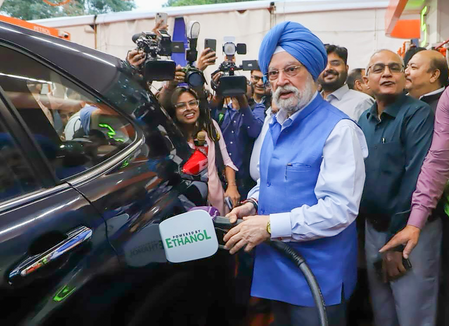
The Petroleum Ministry stated that E20 blending may lead to a 3-5% decrease in fuel economy in some vehicles, but it offers advantages like a higher-octane rating, improved anti-knock characteristics, faster combustion, better pickup, smoother acceleration, and cleaner engine operation. Manufacturers were consulted well in advance for E10 compatibility, with India achieving its E10 target in June 2022, five months ahead of schedule. Extensive consultations were conducted for E20 involving automobile manufacturers, component suppliers, testing agencies, and research institutions.
The ministry emphasized a thorough process for E20, examining aspects such as material compatibility, engine calibration, drivability, emissions, and fuel efficiency. Before the rollout of E20, detailed consultations were held with stakeholders to ensure readiness across the ecosystem. Notably, automobile manufacturers have supported E20, honoring warranties for both old and new vehicles based on satisfactory results and consultations. Maruti Suzuki and Hero MotoCorp reported positive field experiences with E20, dispelling concerns of corrosion or abnormal wear.
E20 was highlighted for its environmental benefits, producing minimal particulate emissions and reducing lifecycle carbon emissions by approximately 40%. The ministry clarified that E20 is a cleaner, higher-quality, and more efficient fuel compared to E10 or pure petrol. It differentiated E20 from premium petrol, noting that premium fuels contain specialized additives and are not separate from base fuel streams. The ministry also mentioned significant investments in ethanol production and infrastructure by public sector banks, creating dedicated facilities to meet India’s blending targets.
