


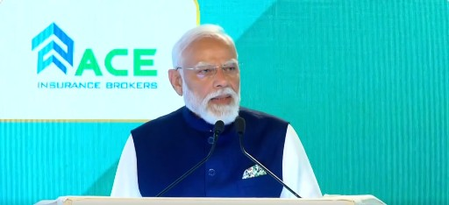
Prime Minister Narendra Modi, speaking at the ET Now Global Business Summit 2026, emphasized India’s role as a global growth engine and its pursuit of a distinctive development model. He highlighted the government’s commitment to economic reforms aimed at benefiting the masses and achieving a ‘Viksit Bharat’ (Developed India). Notably, there has been significant progress in infrastructure development, including highways and railways, due to expedited decision-making processes.
The Prime Minister underscored the recent Union Budget’s focus on capital expenditure (capex) and technology, signaling a push for major infrastructure projects. This emphasis on capex is expected to fuel economic growth, generate employment opportunities, and promote sectors like biopharma, artificial intelligence (AI), and semiconductors. Modi stressed that the reforms are geared towards tangible outcomes, ensuring effective implementation of projects in sectors like railways and highways.
In addition to budgetary measures, Modi highlighted the impact of reforms such as the Goods and Services Tax (GST) and labor reforms in benefiting the populace. He also lauded the success of the Unified Payments Interface (UPI) as a transformative reform that has enhanced financial inclusion for citizens across the country. The Prime Minister reiterated India’s commitment to self-reliance and emphasized the country’s resilience in shaping its own development trajectory without relying on external models.
PM Modi pointed out the significant improvement in India’s global trade engagements, citing the signing of free trade agreements with 38 developed nations. He contrasted this with the previous administration’s limited success in securing comprehensive trade deals. Modi attributed this shift to India’s enhanced self-assurance and strengthened manufacturing capabilities, which have bolstered the country’s standing on the global stage. He concluded by asserting India’s pivotal role in driving global growth and advocating for a reevaluation of existing world order paradigms.
