


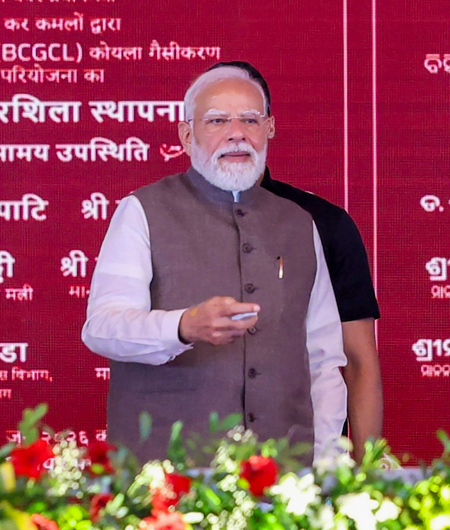
Prime Minister Narendra Modi released the 23rd instalment of the Pradhan Mantri Kisan Samman Nidhi (PM-Kisan) scheme from Tarkeshwar city in West Bengal, transferring over Rs 18,880 crore to 9.44 crore farmers nationwide through Direct Benefit Transfer (DBT). In Gujarat, 51.28 lakh farmers received more than Rs 1,025 crore directly into their bank accounts under this instalment, without intermediaries. The PM-Kisan scheme, initiated in 2019, offers eligible farmer families Rs 6,000 annually in three equal instalments of Rs 2,000.
A state-level “PM Kisan Utsav Diwas” event took place in Gandhinagar, chaired by Chief Minister Bhupendra Patel, with Agriculture Minister Jitu Vaghani and State Minister Ramesh Katara in attendance. Beneficiary farmers received assistance under various agriculture and horticulture schemes, while watching the Prime Minister’s address live across Gujarat. Chief Minister Bhupendra Patel emphasized the government’s dedication to enhancing farmers’ income and rural livelihoods through structured agricultural development.
The Chief Minister highlighted the government’s focus on water conservation, natural farming, and modern agricultural development, even in low rainfall conditions. He mentioned that planned farming is achievable with a scientific approach and that natural farming enhances soil quality, maintains production capacity, and improves farmers’ chances of securing better market prices. The Narmada command area lake-filling limit has been extended from 3 km to 7 km, and infrastructure support like fencing and storage facilities has been broadened to benefit small and marginal farmers.
Water conservation initiatives, including ‘Amrit Sarovar’ and rainwater harvesting structures, are being implemented across districts to enhance irrigation reliability and groundwater recharge. Agriculture Minister Jitu Vaghani praised the PM-Kisan scheme for providing essential financial aid to farmers to cover agricultural input costs. He highlighted that the scheme ensures direct fund transfers to farmers’ accounts, enhancing transparency, eliminating intermediaries, and supporting rural economic stability through government procurement and welfare programs.
