


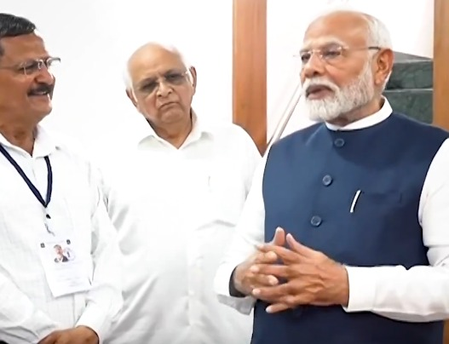
On this day in 2024, Prime Minister Narendra Modi introduced the PM Surya Ghar scheme to bring rooftop solar power to numerous households in India. The initiative not only offers subsidies but also aims to create a nationwide movement towards energy independence through technology-driven implementation. By aligning the scheme with PM Gati Shakti, the Prime Minister envisions integrating rooftop solar planning with a broader national digital infrastructure platform for societal benefits.
Former Secretary of the Ministry of New and Renewable Energy (MNRE), Bhupinder Singh Bhalla, highlighted the expansion of the program’s scope during its development phase. Initially focused on Rooftop Solar deployment, the Prime Minister’s idea to integrate it with a national technology platform significantly broadened its scope. Despite facing criticism, PM Modi believed that scaling solar energy at a mass level would serve the long-term interests of the state and the country.
The PM Surya Ghar: Muft Bijli Yojana, recognized as the world’s largest domestic rooftop solar initiative, aims to transform India’s energy landscape by supplying solar power to one crore households by March 2027. The scheme, launched on February 13, 2024, intends to provide free electricity to households through the installation of rooftop solar panels. With a subsidy of up to 40%, the initiative makes renewable energy more affordable and accessible to families.
The program has already completed 6.3 lakh installations in just nine months, with a monthly installation rate of around 70,000 — nearly ten times higher than the pre-scheme average. With a goal to benefit one crore households, the initiative is expected to save the government Rs 75,000 crore annually in electricity costs. This initiative is a significant step towards clean energy adoption, enabling millions to transition to renewable sources and strengthening India’s commitment to sustainable development and energy innovation.
