


One measure of a government’s success lies in how effectively its policies benefit people at the grassroots level. The Pradhan Mantri Formalisation of Micro Food Processing Enterprises (PMFME) scheme, initiated in June 2020, is a prime example. This scheme, under the ‘Atmanirbhar Bharat Abhiyaan,’ aims to enhance and formalize micro food units nationwide by offering financial, technical, and business support to entrepreneurs for establishing or upgrading their enterprises.
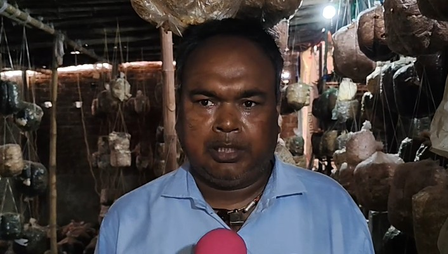
The PMFME scheme strives to enhance the competitiveness of micro enterprises, integrate them into the formal sector, and open up new avenues for growth. Veeru Rajak, a beneficiary from Sheikhpura in Bihar, shared his success story, stating that the loan he received through the PMFME scheme enabled him to start a mushroom business. This venture not only sustains his family but also supports the education of his children, while providing employment to around 10-15 individuals.
Rajak highlighted that his mushroom business involves supplying products across the city and selling directly in the local vegetable market. Previously struggling to make ends meet with odd jobs, he expressed gratitude for the government’s support, emphasizing how the loan transformed his life, ensuring a stable income and improved livelihood for his family. He urged the government to extend this beneficial scheme to more individuals, emphasizing its potential to enhance income sources for many.
The PMFME scheme targets to assist 2 lakh micro food processing units through credit-linked subsidies, aiming to enhance infrastructure and institutional support for accelerated sectoral growth. Embracing the One District One Product (ODOP) strategy, the scheme emphasizes boosting procurement, services, and marketing for specific products, particularly perishables like fruits, vegetables, spices, fisheries, honey, and turmeric. By focusing on processing, storage, branding, and waste reduction, the scheme equips small entrepreneurs with essential resources to expand and compete effectively, thereby elevating farmers’ incomes, generating employment, and fostering rural development.
