


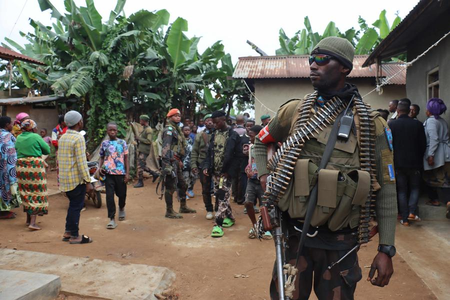
The Democratic Republic of the Congo (DRC) government and the March 23 Movement (M23) rebel group announced progress in Swiss-hosted peace discussions on humanitarian access and ceasefire monitoring. During meetings in Montreux, Switzerland, held from April 13 to 17, both parties acknowledged significant advancements towards finalizing a protocol on humanitarian access and judicial protection. Emphasis was placed on ensuring essential aid reaches conflict-affected populations in eastern DRC.
The agreement included commitments to avoid damaging or confiscating crucial civilian survival resources. Additionally, they vowed to facilitate swift, safe, sustainable, and unimpeded humanitarian access, along with the unrestricted movement of aid workers, relief supplies, and humanitarian convoys in conflict zones. Prisoner releases within ten days, as per existing arrangements, were also agreed upon to enhance mutual trust.
Despite the positive developments, the security situation in North Kivu and South Kivu provinces of eastern DRC remains precarious. Ongoing sporadic clashes on various front lines in these regions have raised concerns about the ceasefire’s implementation. These discussions are viewed as an extension of the Doha process, maintaining the same negotiation framework established earlier.
Qatar has been mediating the crisis in eastern DRC since March 2025, hosting multiple rounds of talks between the DRC government and the M23. DRC Foreign Minister Therese Kayikwamba Wagner informed diplomats accredited to the country in March about the “paralysis” of the Doha peace process, attributing the deadlock to broader geopolitical shifts and a rapidly deteriorating regional security landscape. Despite the ongoing talks, recent clashes in parts of North Kivu and South Kivu provinces have heightened tensions, with both sides accusing each other of violating ceasefire agreements.
