


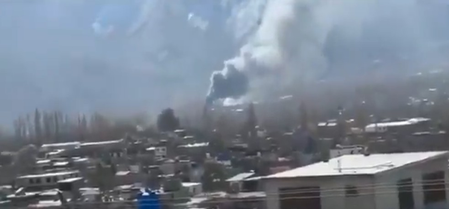
Widespread protests in Pakistan-occupied Gilgit-Baltistan (PoGB) intensified for a second day following the death of Iranian Supreme Leader Ayatollah Ali Khamenei. The demonstrations saw large numbers of people engaging in arson and violence across the region.
In the Skardu district of PoGB, at least 11 individuals lost their lives as security forces fired on protesters who were vandalizing and setting fire to a UN office. The local administration responded by imposing a curfew and requesting army deployment due to the escalating unrest in the area.
Angry mobs in Gilgit and Skardu targeted various buildings, including the offices of the United Nations Military Observer Group in India and Pakistan (UNMOGIP), government offices, a school, and the Agha Khan Rural Support Programme (AKRSP) office, leading to significant damage.
Ghulam Hasan, an official of the PoGB administration, issued a notification urging the deployment of Pakistan Army troops in Gilgit and Skardu and the immediate imposition of a three-day curfew to maintain order and protect lives and property amid the protests.
Inspector General of Police Gilgit-Baltistan, Akbar Nasir, announced the deployment of army, police, Rangers, and Frontier Corps (FC) personnel in affected areas during the unrest. The curfew was to be temporarily lifted for funeral prayers and burials, with attendance restricted to local residents only.
Protests also erupted outside the US Consulate General in Karachi and Lahore, with calls for demonstrations at the US Embassy in Islamabad and Consulate General Peshawar. The US Embassy advised American citizens in Pakistan to stay informed and practice good personal security measures.
