


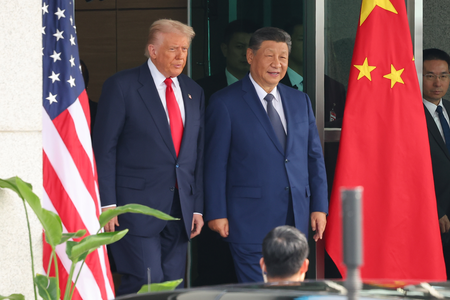
US President Donald Trump expressed his intention to visit China soon, highlighting his close personal rapport with President Xi Jinping. Speaking at a summit in Miami, Trump emphasized the ongoing competition between the US and China in trade and economic policies. He mentioned his strong relationship with Xi, citing their collaboration on various issues, including the TikTok deal.
Trump revealed that he directly requested Xi to approve the TikTok transaction after previous rejections. The President recounted his conversation with Xi, where he asked for approval, and Xi agreed to it. Trump emphasized that the deal is mutually beneficial for both countries, especially since the investors involved have substantial business interests in China. He credited the successful outcome to his direct engagement with Chinese leadership.
While acknowledging the competitive aspect of the US-China relationship, particularly in trade, Trump highlighted the tariffs imposed during his administration, which had peaked at 145 percent. He admitted to perhaps going overboard with the rates initially but later reduced them. Trump mentioned that the two nations now compete effectively while maintaining a strong business relationship.
Trump recognized China’s economic prowess, praising their manufacturing capabilities and scale. He commended China’s manufacturing efficiency, particularly in sectors like automobile production. The President confirmed his upcoming visit to China, which had been postponed due to ongoing military operations. Trump framed the visit as part of the continuous engagement with Beijing, despite the existing economic rivalry between the two nations.
Highlighting the United States as the world’s leading economy, Trump reiterated its status as the “hottest country anywhere in the world.” The economic ties between the US and China remain significant, despite ongoing tensions related to tariffs, technology, and market access. Both countries engage in high-level dialogues to manage competition and prevent escalation, considering the global economic implications of their relationship.
