


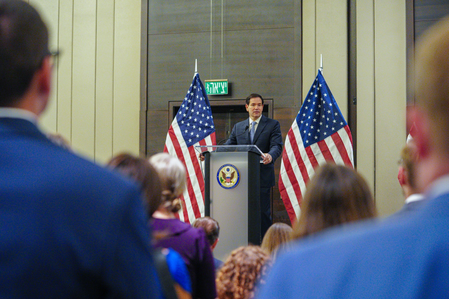
US Secretary of State, Marco Rubio, stated that the United States is making swift progress in its military operations against Iran and anticipates completing its objectives in a matter of weeks, not months. Rubio, following meetings with G7 allies in Paris, emphasized the clear definition of the mission, aiming to cripple Iran’s navy, air force, and production capabilities for missiles and drones.
Rubio highlighted the mission’s goal to significantly reduce Iran’s missile launchers to prevent the nation from using them to develop nuclear weapons and pose a global threat. He expressed satisfaction with the steady progress, noting that the operation is on track or ahead of schedule and is expected to conclude soon without the need for ground troops.
The Secretary of State also cautioned about potential post-operation risks, particularly in the Strait of Hormuz, a crucial global oil passage. Rubio warned of Iran’s possible attempts to impose an illegal tolling system in the strait, labeling it as dangerous and unacceptable. He stressed the importance of a global plan to counter such actions, with a focus on contributions from Asian countries to safeguard international waterways.
Rubio emphasized the distinction between the Iranian government and its people, praising the Iranian population while criticizing the leadership as a radical, Shia clerical regime. He condemned the regime’s allocation of resources towards terrorism and military capabilities instead of development, asserting that Iran will emerge weaker after the operation. Rubio underscored the necessity of preventing a regime with such intentions from acquiring nuclear weapons.
Regarding the Russia-Ukraine conflict, Rubio reiterated the US’s commitment to supporting peace efforts and readiness to assist in ending the war. He mentioned the possibility of reallocating US military supplies earmarked for Ukraine based on the country’s needs, prioritizing American interests.
