


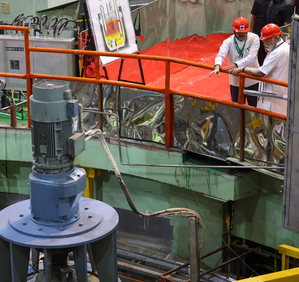
The Prototype Fast Breeder Reactor (PFBR) in Kalpakkam, Tamil Nadu, attained criticality on April 6, marking a significant milestone in India’s nuclear capabilities. Built by Bharatiya Nabhikiya Vidyut Nigam Limited (BHAVINI), this 500 MWe reactor signifies India’s progress in advanced nuclear technologies.
The successful criticality of the PFBR highlights India’s pursuit of a closed nuclear fuel cycle to maximize its abundant thorium resources. With a current nuclear capacity of 8.78 Gigawatt (GW), India aims to expand its nuclear energy sector significantly by 2031–32, with a projected capacity of 22.38 GW.
India’s nuclear ambitions extend globally, with agreements on Civil Nuclear Cooperation signed with 18 countries. The country is also investing in Small Modular Reactors (SMRs) and next-generation designs like the Bharat Small Modular Reactor (BSMR-200) and the SMR-55, under the leadership of the Bhabha Atomic Research Centre (BARC).
To support these initiatives, India has enacted the ‘Sustainable Harnessing and Advancement of Nuclear Energy for Transforming India (SHANTI) Act, 2025,’ which modernizes the nuclear legal framework and allows limited private participation in the sector.
