


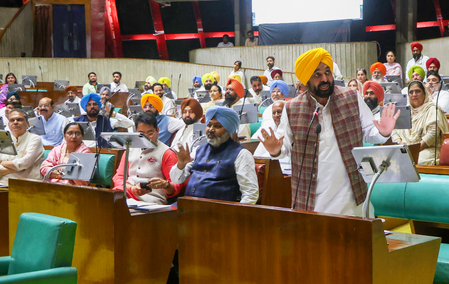
The Punjab Vidhan Sabha unanimously approved a resolution condemning the Indian government’s move to replace the Mahatma Gandhi National Rural Employment Guarantee Act (MGNREGA) with a new law called Viksit Bharat – Guarantee for Rozgar and Ajeevika Mission (Gramin). This new scheme eliminates the right to guaranteed wages and employment for poor laborers, women, and numerous job card-holding families in the state, imposing additional financial burdens on the states.
Rural Development and Panchayats Minister Tarunpreet Singh Sond highlighted that the MGNREGA, initially known as the National Rural Development Guarantee Act, was enacted by the Indian government in September 2005 and implemented in all Punjab districts by 2008-09. Renamed as MGNREGA on October 2, 2009, the scheme aims to provide at least 100 days of guaranteed wage employment annually to adult members of rural households willing to undertake unskilled manual work.
Minister Sond emphasized that the MGNREGA is a significant law in India’s social welfare and rural economic security framework, recognizing employment as a legal entitlement for the impoverished, landless, marginalized communities, SC/ST individuals, and rural women. In contrast, the Viksit Bharat- Guarantee for Rozgar And Ajeevika Mission (Gramin) Act 2025, while mentioning 125 days of guaranteed work, is constrained by budget limitations, rendering this assurance merely theoretical.
The new law shifts the responsibility of providing employment from being demand-driven to being determined by pre-allocated budgets, creating challenges for states in fulfilling workers’ demands promptly. Under the new act, the government of India will predetermine budget limits for the fiscal year, potentially hindering workers’ legal right to demand work and burdening state governments with unemployment allowances when the central budget allocation is exhausted.
