


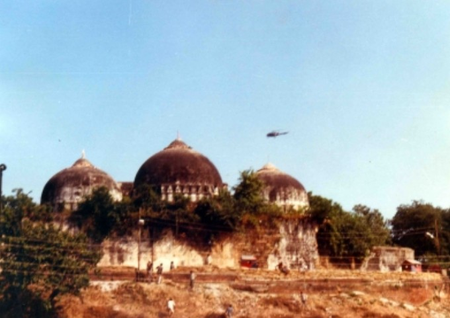
Nripendra Misra, Chairman of the Ram Mandir Construction Committee and former Principal Secretary to late Uttar Pradesh Chief Minister Kalyan Singh, discussed the 1992 Babri Masjid demolition events. He highlighted that crucial decisions during such times are primarily influenced by political leaders rather than bureaucratic officials. Misra recalled Kalyan Singh’s directive in 1992 for the police not to use force against ‘Karsevaks’ despite reports of law and order breakdown in Ayodhya.
Reflecting on his tenure under different administrations, including Mulayam Singh Yadav’s, Misra pointed out the contrasting crisis management approaches of the two leaders. He emphasized that decisions like these are predominantly political, with minimal involvement from bureaucratic authorities like the Home Secretary and the Director General of Police. Misra’s remarks shed light on the political dynamics and decision-making processes surrounding the Babri Masjid incident and the Ayodhya firing incidents in 1990.
During the Ayodhya firing incidents in 1990, under Mulayam Singh Yadav’s leadership, police firing on unarmed karsevaks led to the deaths of over 28 individuals. Yadav later defended the action as necessary to protect the Babri Masjid and uphold national unity. In contrast, during the Babri Masjid demolition in 1992, Kalyan Singh, then Chief Minister of Uttar Pradesh, prohibited any firing on karsevaks despite the tense atmosphere, stating, “Karsevaks will not be shot at for a building.” Singh resigned from his post that evening, taking moral responsibility for the events.
Nripendra Misra’s insights underscore the different administrative and political responses witnessed during these significant events in Ayodhya’s history. They highlight the pivotal role of political decision-making in law and order situations, emphasizing the influence of political leadership in critical moments.
