


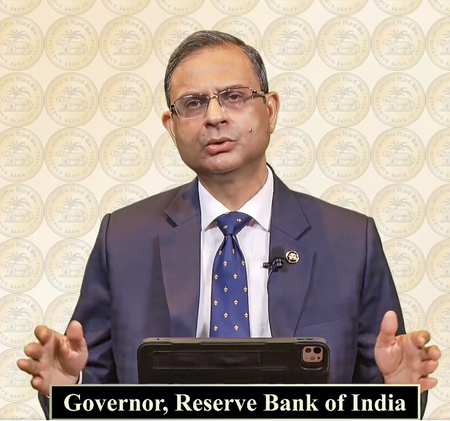
The Reserve Bank of India (RBI) is closely watching the repercussions of the West Asia conflict and refrains from committing to future interest rate adjustments, as stated by Governor Sanjay Malhotra. Speaking at Princeton University, Malhotra emphasized the risk of prolonged supply disruptions leading to inflationary pressures in India’s overall price levels. West Asia’s significant role in India’s trade, accounting for a substantial portion of exports, imports, crude oil and fertilizer imports, and remittances, poses a direct threat to the Indian economy.
Malhotra expressed concerns about potential second-round effects, cautioning that persistent disruptions could escalate from a supply shock to a broader impact on price levels. The RBI remains cautious on rate changes, adopting a wait-and-watch approach, with the monetary policy committee staying data-dependent and continuously evaluating risk balances. Since June 2025, the MPC has maintained a neutral stance following multiple rate cuts totaling 125 basis points since February of that year.
Highlighting the RBI’s foreign exchange market interventions, Malhotra clarified that the bank has not committed to an unsustainable peg for the Indian rupee, which depreciated over four percent post the conflict in March. India’s foreign exchange reserves, exceeding $710 billion, cover more than 11 months of imports, providing a strong buffer against external shocks. Additionally, Malhotra underscored the RBI’s focus on developmental initiatives, citing advancements in the Unified Lending Interface and the central bank’s digital currency pilot.
Discussing digital infrastructure and growth, the RBI Governor pointed out that the Unified Payments Interface (UPI) recorded over 22 billion transactions in March alone. He mentioned the ongoing development of the Unified Lending Interface (ULI) to facilitate instant credit access for small farmers and business owners. Furthermore, he noted a decline in India’s fiscal deficit-to-GDP ratio from 9.2 percent in 2020-21 to 4.4 percent in 2025-26, highlighting the country’s reasonable general government debt-to-GDP ratio of 81.1 percent in 2024-25 compared to other top global economies.
