


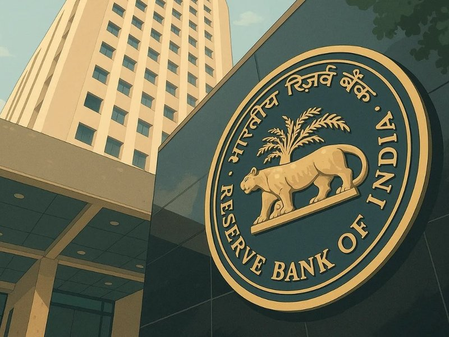
The Reserve Bank of India’s Monetary Policy Committee is commencing its three-day meeting, with predictions pointing towards a status quo on interest rates amidst global volatility fueled by tensions in West Asia. The decision is scheduled to be disclosed by Governor Sanjay Malhotra on Friday. Despite ongoing geopolitical and global economic challenges, experts anticipate the RBI to retain current rates, with a cautious or hawkish stance likely due to external pressures.
Economists, including HSBC’s Pranjul Bhandari, foresee the central bank maintaining a steady course in the short term but potentially adopting a tightening bias gradually. Market expectations hint at two rate cuts starting in late 2026, steering away from an aggressive tightening strategy. The RBI’s updated forecasts will be closely scrutinized for insights on the impact of the energy crisis, particularly regarding potential revisions to crude oil price assumptions.
Analysts suggest that a higher baseline scenario could push inflation projections towards 5%, up from the earlier estimate of 4.6%. Inflationary concerns have heightened due to factors like below-average monsoon forecasts, recent fuel price hikes, and the risk of inflation spillover from wholesale to retail markets. The current inflation surge is primarily attributed to supply-side factors, with projections indicating a 6.7% GDP growth for FY27 if crude oil prices average around $90 per barrel.
SBI Research anticipates the RBI maintaining the repo rate unchanged, emphasizing a data-driven approach amidst persistent inflation risks and external instabilities. GDP growth projections stand at 6.6% for FY27 and around 7.5% for FY26, with CPI inflation expected to hover above 5% due to fuel price dynamics and global uncertainties. Emkay Global Financial Services echoes expectations of a rate stability, citing lower crude prices and improved external economic prospects following corrections in Brent oil rates. The outlook suggests that reduced oil costs and a calmer geopolitical climate could alleviate pressure on the rupee and support a prolonged pause in monetary policy adjustments.
