


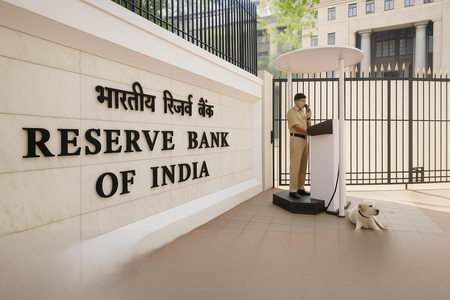
The RBI’s recent decision on the repo rate indicates a cautious strategy to evaluate external developments’ impact on domestic growth and inflation before making interest rate changes. Amid concerns like high energy prices and potential monsoon issues, the RBI has lowered its FY27 GDP growth projection to 6.6%, down from 6.9% earlier. Noteworthy measures announced include attracting foreign capital inflows and tax exemptions for foreign investors in government securities.
Rajani Sinha, Chief Economist at CareEdge Ratings, highlighted the MPC policy’s focus on initiatives to draw foreign investments, such as expanding eligible securities for foreign investors. The government’s removal of taxes on capital gains and interests for foreign investors in government securities was also emphasized. The current account deficit is expected to widen to 2.1% of GDP in FY27, a relatively better scenario compared to previous stress periods.
Srinivasan Vaidyanathan from Essar Capital praised the RBI’s decision to maintain the repo rate at 5.25% with a neutral stance, considering the challenging macro environment. The central bank’s cautious stance on inflation, amidst high crude prices and a weaker rupee, indicates a balance between growth support and vigilance towards external risks. This stability in rates is beneficial for capital-intensive businesses, ensuring investment predictability.
Ajay Kumar Srivastava, CEO of Indian Overseas Bank, noted the RBI’s prudent approach in the face of geopolitical tensions and energy price spikes, maintaining borrowing cost predictability. The steady rates reinforce the sustainability of the economic recovery, offering relief to households and businesses. Dhanpat Nahata, Managing Partner at Essar Capital, highlighted the impact of global uncertainties on markets, emphasizing the need for enterprises to monitor inflation and currency dynamics closely.
