


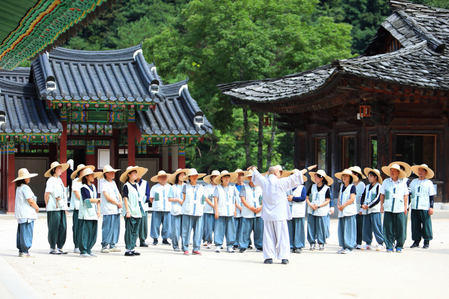
Nearly 350,000 individuals in South Korea engaged in “temple stays,” an overnight cultural program at Buddhist temples, last year. This marked the highest participation since the program’s inception in 2002, as reported by the Jogye Order of Korean Buddhism. A total of 349,219 people, including 293,704 South Koreans and 55,515 foreign tourists, took part in the program at 158 temples across the country in 2025, reflecting a 5.1% increase from the previous year.
The temple stay program was initially introduced to showcase daily life at a temple, aiming to promote traditional Korean culture and address accommodation shortages during the 2002 World Cup, which South Korea and Japan jointly hosted. Over the past two decades, both the number of temples involved in the program and the visitors have significantly risen. The program began with around 2,500 participants at 33 temples in its inaugural year, and to date, approximately 4.18 million individuals have participated.
The Jogye Order has outlined plans to further enhance the temple stay program by collaborating with cultural and tourism resources beyond Seoul to stimulate regional economies. Additionally, the Order intends to develop specialized programs focusing on stress relief, mental health, and initiatives tailored for socially marginalized groups. However, the number of individuals receiving monastic ordination witnessed a notable decline last year, dropping from 226 in 2014 to only 81 individuals. This decrease raises concerns about the diminishing number of monks available for missionary and pastoral roles, contributing to a cycle of reduced Buddhist membership and fewer monastics.
Recognizing this trend as a significant challenge to the foundation of Korean Buddhism, the Jogye Order is shifting its attention to younger generations, advocating for “hip Buddhism” – a vision of the religion that is youthful, dynamic, and culturally relevant.
