


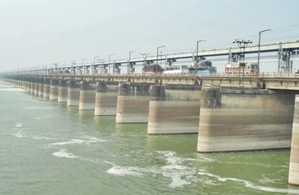
When a new government takes office in Bangladesh after the February 12 election, one of the crucial tasks will be addressing the renewal of the Farakka water sharing treaty with India, set to expire in 2026 without an automatic extension clause, requiring fresh negotiations. The Farakka Barrage, situated in West Bengal’s Murshidabad district, has long been central to India-Bangladesh relations. Built mainly to divert water from the Ganga to the Hooghly river for silt removal and enhancing navigability for the Kolkata port, it has been at the core of a significant transboundary water dispute in South Asia.
Interestingly, historical treaties were signed by the newly appointed leadership of both countries. The first “Agreement on sharing of the Ganges waters at Farakka” was signed in Dhaka on November 7, 1977, shortly after Morarji Desai became India’s Prime Minister in March and Major-General Ziaur Rahman assumed the presidency of Bangladesh in April. Similarly, the second arrangement was signed on December 12, 1996, with both Prime Ministers, India’s H.D. Deve Gowda, and Bangladesh’s Sheikh Hasina, having been in office for only six months.
Currently, India has a stable government led by Prime Minister Narendra Modi, while Bangladesh is moving towards establishing a democratically-elected government after a period of volatility lasting nearly 17 months. The future will reveal whether the treaty will be renewed later this year through mutual consent, with enhancements, or if New Delhi will take a firm stance if Dhaka aligns with international actors aiming to destabilize India. Given the circumstances, New Delhi may not hesitate to act in defense of the country’s security and integrity.
