


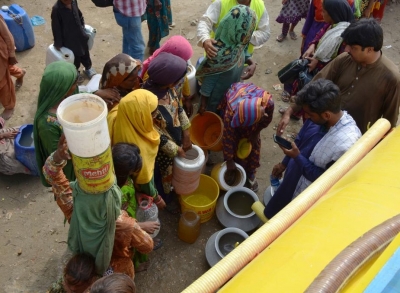
Residents in Karachi, Pakistan, are grappling with a severe water shortage as the city experiences a prolonged deficit in water supply. The crisis began on April 21 when the Karachi Water and Sewerage Corporation (KWSC) shut down a crucial conduit to facilitate the installation of a new 72-inch pipeline near the Dhabeji Pumping Station, leading to a significant shortfall in water supply.
This planned interconnection resulted in a deficit of 250 million gallons per day (MGD), equivalent to about 40% of Karachi’s daily water supply of 650MGD, while the city’s demand exceeds 1,200MGD. Although the water utility managed to restore 100MGD the following day, a major power outage at the pumping station caused multiple pump failures, exacerbating the situation.
Three 72-inch diameter water lines serving Karachi ruptured at the Dhabeji pumping station due to the power breakdown, causing a shortfall of 140 MGD. This incident damaged critical infrastructure at Dhabeji, affecting water supply to various areas, including Korangi, Malir, Chanesar, Jinnah Town, and others. Emergency repair teams swiftly addressed the burst lines, but new leakages in Line No. 5 at Gulshan-i-Hadeed required additional repair work.
Despite efforts to mitigate the water shortage, residents continue to face challenges, with areas like Korangi, Malir, Jinnah Town, Saddar, DHA, and Clifton being the most severely impacted. Many locals have resorted to purchasing water from tankers as tap water remains unavailable for days, underscoring the pressing need for a sustainable solution to Karachi’s water woes.
