


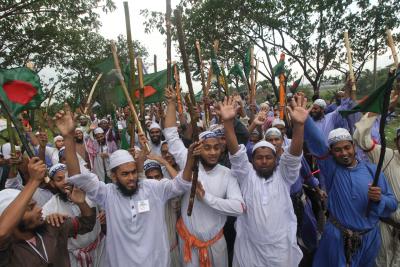
The resurgence of Tawhidi Janata in Bangladesh is characterized as a morally driven form of coercive populism, rather than organized militancy, thriving in the absence of strong institutions and amid questions of political legitimacy. This mobilization openly targets un-Islamic values, allowing it to reshape public spaces while evading immediate repression.
For over 16 years, the Awami League government in Bangladesh under Sheikh Hasina’s leadership promoted state-endorsed secular nationalism, suppressing Islamist parties and religious networks. However, with Hasina’s removal in August 2024, a power vacuum emerged, leading to the rise of Tawhidi Janata, which operates without formal structures but influences public life through moral pressure and symbolic actions.
Tawhidi Janata, though not a formal organization, has been linked to acts of violence in Bangladesh. Incidents such as clashes with police, attacks on shrines, and disruptions of cultural events have been attributed to alleged supporters of this group. The mobilization emphasizes visibility and moral activism, challenging state authority and societal norms.
The emergence of Tawhidi Janata poses a significant challenge to Bangladesh’s transition, raising questions about reclaiming authority through democratic legitimacy or ceding power to those asserting moral superiority through public demonstrations.
