


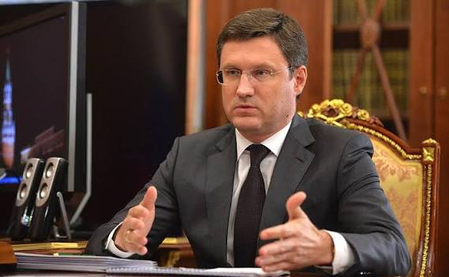
The Russian economy has made significant progress in adapting to external challenges, with Deputy Prime Minister Alexander Novak stating that it has completed 80% of this adaptation. Speaking at the Bank of Russia Financial Congress, Novak mentioned that while advancements towards technological sovereignty and leadership are at the halfway mark, key shifts in Russia’s economic structure have been highlighted. Notably, the share of the fuel and energy complex in GDP has decreased from 18-20% to 13%, with a corresponding drop in its proportion in federal budget revenues from 42% to 22%.
Meanwhile, the investment-to-GDP ratio in Russia is expected to increase from the current 24% to 28% as per official plans and forecasts. In a separate update, the Bank of Russia indicated that domestic oil prices in Russia may remain high in the short term before gradually decreasing. The central bank’s policy summary suggested that geopolitical conflicts causing inventory drawdowns could delay the oil market’s transition to a surplus, leading to a slow easing of oil prices in the near future. While some anticipate a quicker decline in prices, the bank noted that elevated prices had spurred production capacity expansion and increased oil supply in other regions, facilitating faster replenishment of depleted inventories.
